Tokyo Marathon 2027 weather: what race day will likely feel like
The short answer
Race day at the Tokyo Marathon (Sunday 7 March 2027) is usually cool: about 8° at the 09:10 start and 12° at a 4:13 finish, with a light northerly breeze. In 10 years of records the heat stress was Low on most days.
The Tokyo Marathon 2027 is on Sunday 7 March: 42.2 km through the centre of the city, from the Tokyo Metropolitan Government Building in Shinjuku to Gyoko-dori in front of Tokyo Station, with turns at Ueno, Monzen-nakacho and Tamachi on the way. Here's what race day has usually felt like, section by section, for a runner in the middle of the field.
What will the weather be like at the 2027 Tokyo Marathon?
Usually cool, with a light north wind: good running weather for most of the field. In the records, a runner from the 09:10 start began at about 8° and finished at about 12°, with a dew point near 4°. RunFast's engine rated race day Good on 6 days in 10, Fair on 3 and Tough on 1.
The heat stress (WBGT, the number race medical teams use) was usually about 13°. It reached Moderate or more on about 1 day in 10, and High on less than 1. The warmest race day in the records reached 21°.
| Section | Where | Air | Heat stress | Wind | Rated, days in 10 |
|---|---|---|---|---|---|
| 1 · 09:10km 0–7 | Shinjuku to Iidabashi | 9°dew point 3° | LowModerate or more 0 in 10 | 11 km/hfrom the north | |
| 2 · 09:53km 7–13 | Kanda, Akihabara and the Ueno turn | 10°dew point 2° | LowModerate or more 1 in 10 | 11 km/hfrom the north | |
| 3 · 10:28km 13–20 | Nihonbashi to Asakusa | 11°dew point 3° | LowModerate or more 1 in 10 | 12 km/hfrom the north | |
| 4 · 11:12km 20–28 | Ryogoku and Monzen-nakacho | 11°dew point 3° | LowModerate or more 1 in 10 | 12 km/hfrom the north | |
| 5 · 11:55km 28–34 | Nihonbashi and Ginza | 12°dew point 3° | LowModerate or more 1 in 10 | 12 km/hfrom the north-west | |
| 6 · 12:30km 34–40 | Shiba and the Tamachi turn | 12°dew point 3° | LowModerate or more 1 in 10 | 13 km/hfrom the north-west | |
| 7 · 13:05km 40–42.195 | Hibiya to Tokyo Station | 12°dew point 3° | LowModerate or more 1 in 10 | 13 km/hfrom the north-west |
Where does the weather usually cost runners time?
Mostly the wind, rarely the heat. On the middle day of the records, the weather cost a 6:00-per-km runner about 3 minutes over the whole race, and 7 minutes or more on 1 day in 10. The wind was the main cause on about 8 to 9 of those days in 10.
 Start · Tokyo Metropolitan Government BuildingUenoAsakusaMonzen-nakachoTamachiFinish · Tokyo Station1234567Historic
- Ideal
- A little slower
- Hard
- Very hard
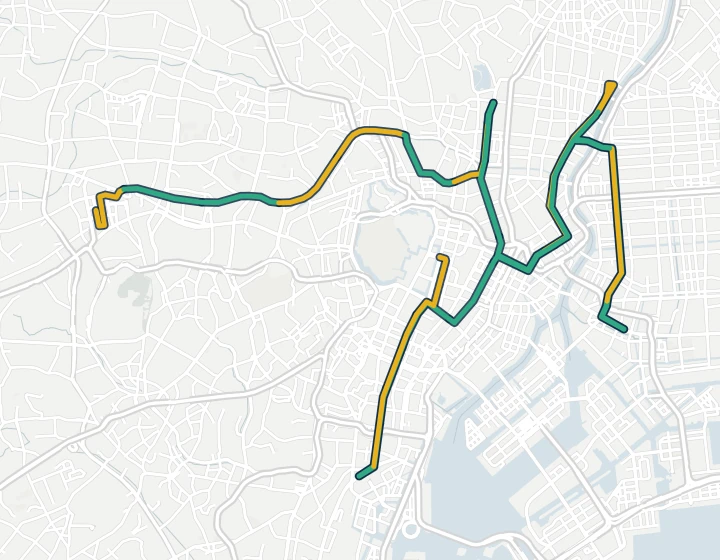
Each stretch is coloured by how hard the weather made it at 6:00 per km, at the hour a runner from the 09:10 start gets there, on the middle day of the records around 7 March, 2015 to 2024 (Historic). The numbers are the seven sections below.
Weather: contains modified Copernicus Climate Change Service information (ERA5). Course line: the organiser’s own course map (simplified). Map: OpenFreeMap, © OpenMapTiles, © OpenStreetMap contributors.
On a middle day no stretch is hard. The amber stretches, a little slower by about 1 to 2.5%, are mostly the legs heading north, into the wind: towards the Ueno turn, from Nihonbashi up to Asakusa, back from Monzen-nakacho to the Kuramae Bridge, and the last few kilometres back from Tamachi to the finish, along with parts of the first 7 km. The legs heading south are green. The breeze is usually from the north at 11 to 13 km/h. On each out-and-back it was more often in runners' faces heading north and behind them heading south: out to the Ueno turn, back from Monzen-nakacho, and back from Tamachi to the finish are the legs into it.
What is each section likely to feel like?
Each section with its usual race morning, hour by hour, timed for the 09:10 start and a steady 6:00 per km.
1. Shinjuku to Iidabashi
From the Tokyo Metropolitan Government Building, past Shinjuku and down through Kappazaka-shita and Ichigaya to the Koraku Bridge intersection at km 7. The field is at its most crowded here. It's about 9° through the first 7 km, with a light northerly of about 11 km/h, mostly across the course as it heads east. This section was rated Good on 8 days in 10.
- Heat stress
- WBGT 10°Rarely Moderate
- Air
- 9°6–14° on 8 days in 10
- Dew point
- 3°8° or more on 1 day in 10
- Wind
- 11 km/h from the northMostly a headwind on 1 day in 10
- Weather toll
- 0.4 min1.4 min or more on 1 day in 10
The usual hour here on race morning: air and dew point °C, heat stress (WBGT, coloured Low, Moderate, High or Extreme), wind km/h, and the share of hours with rain. The hours a 6:00 per km runner is here are marked.
2. Kanda, Akihabara and the Ueno turn
Through Jinbocho and Awajicho, past Akihabara at km 10 to the turn at Ueno-hirokoji (km 10.6), then back south through Kanda to Nihonbashi at km 13. On the way out to Ueno the northerly is in runners' faces; on the longer way back south to Nihonbashi it's behind, and the section was mostly a tailwind on about 4 days in 10. It was rated Good on 9 days in 10, the most of any section.
- Heat stress
- WBGT 11°Moderate or more on 1 day in 10
- Air
- 10°7–15° on 8 days in 10
- Dew point
- 2°8° or more on 1 day in 10
- Wind
- 11 km/h from the northMostly a headwind on 1 day in 10
- Weather toll
- 0.2 min0.9 min or more on 1 day in 10
3. Nihonbashi to Asakusa
North-east from Nihonbashi to Kuramae and Komagatabashi at Asakusa (km 18), then along the Sumida River to the Kuramae Bridge at km 20. About 11°, with the northerly, about 12 km/h, in runners' faces on the way up to Asakusa. The heat stress is usually Low, and Moderate on about 1 day in 10.
- Heat stress
- WBGT 12°Moderate or more on 1 day in 10
- Air
- 11°7–16° on 8 days in 10
- Dew point
- 3°8° or more on 1 day in 10
- Wind
- 12 km/h from the northRarely a headwind
- Weather toll
- 0.6 min1.4 min or more on 1 day in 10
4. Ryogoku and Monzen-nakacho
Across the Sumida to Ryogoku and halfway, south to the turn at Tomioka Hachimangu in Monzen-nakacho (km 23.95), and back to the Kuramae Bridge at km 28. Out and back with the northerly, about 12 km/h: behind runners on the way south to Monzen-nakacho and in their faces on the way back north to the Kuramae Bridge, so it about evens out.
- Heat stress
- WBGT 12°Moderate or more on 1 day in 10
- Air
- 11°8–17° on 8 days in 10
- Dew point
- 3°8° or more on 1 day in 10
- Wind
- 12 km/h from the northRarely a headwind
- Weather toll
- 0.5 min1.6 min or more on 1 day in 10
5. Nihonbashi and Ginza
Past the Meijiza theatre at Hamacho, through Nihonbashi again at km 32 and into Ginza, to Hibiya at km 34. About 12° through Ginza, with the heat stress usually Low, and Moderate on about 1 day in 10.
- Heat stress
- WBGT 13°Moderate or more on 1 day in 10
- Air
- 12°8–17° on 8 days in 10
- Dew point
- 3°9° or more on 1 day in 10
- Wind
- 12 km/h from the north-westMostly a headwind on 3 days in 10
- Weather toll
- 0.2 min1.8 min or more on 1 day in 10
6. Shiba and the Tamachi turn
South past Shiba Park to the last turn, at Tamachi Station (km 37.5), and back north on the same road. Behind runners on the way south to Tamachi and in their faces on the way back, with the wind about 13 km/h by now and less settled in direction: it was mostly a headwind on about 4 days in 10, and mostly behind on about 4. This section was rated Good on 7 days in 10.
- Heat stress
- WBGT 13°Moderate or more on 1 day in 10
- Air
- 12°8–17° on 8 days in 10
- Dew point
- 3°9° or more on 1 day in 10
- Wind
- 13 km/h from the north-westMostly a headwind on 4 days in 10
- Weather toll
- 0.4 min1.7 min or more on 1 day in 10
7. Hibiya to Tokyo Station
Past the Hibiya intersection at km 41 to the finish at the Wadakura Gate intersection, on Gyoko-dori in front of Tokyo Station. It's about 12° at the finish, and the wind, about 13 km/h, was mostly in runners' faces on about 4 days in 10. This short last stretch was rated Tough on 2 days in 10, the most of any section.
- Heat stress
- WBGT 13°Moderate or more on 1 day in 10
- Air
- 12°8–17° on 8 days in 10
- Dew point
- 3°9° or more on 1 day in 10
- Wind
- 13 km/h from the north-westMostly a headwind on 4 days in 10
- Weather toll
- 0.3 min1.1 min or more on 1 day in 10
What should runners wear and pack for race day?
Layers for the wait in Shinjuku, race kit for about 9–12°, and something for the wind. The organiser's course page has the course map, the elevation profile and the expected passing times at every kilometre. From the weather records:
- Old layers for the start. It was about 6° before the 09:10 start, 3° or colder on 1 morning in 10.
- Race kit for 9–12°. That's shorts or tights and a long-sleeved top for many runners, with arm sleeves you can push down.
- A cap or a light shell on wet days. Rain fell during the run on about 2 days in 10.
- Gloves you can drop. The first hour is about 8 to 10°, with a northerly of about 11 km/h, so hands get cold before they warm up.
Japan doesn't change its clocks, so every time is Japan Standard Time. The course closes at 16:10, seven hours after the start; check the organiser's guidance for the cut-off points along the way.
When does the real forecast open?
Ten days before the race, in the RunFast app: on 25 February. Load the course with your own pace and start time, and RunFast shows the heat and the wind at each stretch as you get there. From then on, trust the forecast over this preview.
How did we work this out?
The course was run again on every day from a week before to a week after 7 March, in each year from 2015 to 2024: 150 days. Each run started at the race's 09:10, Japan Standard Time, at a steady 6:00 per km, on that day's hourly Copernicus ERA5 weather, with its dew point and sunshine. RunFast's engine, the same one the app uses, worked out the heat stress and the weather's toll, and rated the run and each section. The start-area wait is the lowest temperature between 7:00 and the start, and a wet day has 1 mm of rain or more.
ERA5's grid cells are about 25 km across, so one covers this whole course. Streets, shelter, the tall buildings and the city's own warmth don't show. The course line is the organiser's own course map (the 2026 edition's, which the 2027 course page's kilometre table follows), simplified. Historic weather, not a forecast.
Sources: Tokyo Marathon Foundation's course map and passing times and home page, with the 2027 date; the organiser's Google map of the course, from the course page; ERA5 hourly time series (Hersbach et al., 2020). Contains modified Copernicus Climate Change Service information (2026). Neither the European Commission nor ECMWF is responsible for any use that may be made of the Copernicus information or data it contains.
Questions
When is the 2027 Tokyo Marathon?
Sunday 7 March 2027. The wheelchair race starts at 9:05 and the runners at 9:10, Japan Standard Time, from the Tokyo Metropolitan Government Building in Shinjuku. The finish is on Gyoko-dori in front of Tokyo Station, and it closes at 16:10, seven hours after the start.
What is the weather usually like for the Tokyo Marathon?
Cool, with a light north wind. In 10 years of records around race day, a runner from the 09:10 start began at about 8° and finished at about 12°, with a dew point near 4° and a northerly breeze of 11 to 13 km/h. Heat stress reached Moderate or more on about 1 day in 10.
Is the Tokyo Marathon windy?
Not very. The breeze is usually from the north at about 11 to 13 km/h through the morning, gusting to about 21 to 26 km/h, and it loses its direction in the early afternoon. The course runs out and back three times, to Ueno, Monzen-nakacho and Tamachi, so most winds are behind the runners on one leg and in their faces on the other.
Does it rain on Tokyo Marathon day?
Fairly often. Rain of 1 mm or more fell on about 4 days in 10 around race day, and on about 2 days in 10 while a 4:13 runner was on the course.
When will the Tokyo Marathon forecast be available?
The real forecast opens 10 days before the race in the RunFast app, on 25 February. Until then, this preview is historic weather from 10 years of Copernicus ERA5 records, not a forecast.